Good home oral hygiene is essential for preventing tooth decay, gingivitis and periodontal disease. During every professional dental hygiene appointment, our team provides personalised guidance on the most effective techniques for using your toothbrush, dental floss and interdental brushes, tailoring their advice to your individual oral health needs.
Gently removes bacterial plaque, surface staining and biofilm using a controlled jet of air, water and specially formulated powder.
Ultrasonic technology effectively removes tartar from both above and below the gum line, while maximising patient comfort.
Curettes and other hand instruments are used to complete the scaling process in areas that are more difficult to reach.
They enable thorough cleaning of the root surfaces, helping the gum tissues to heal.
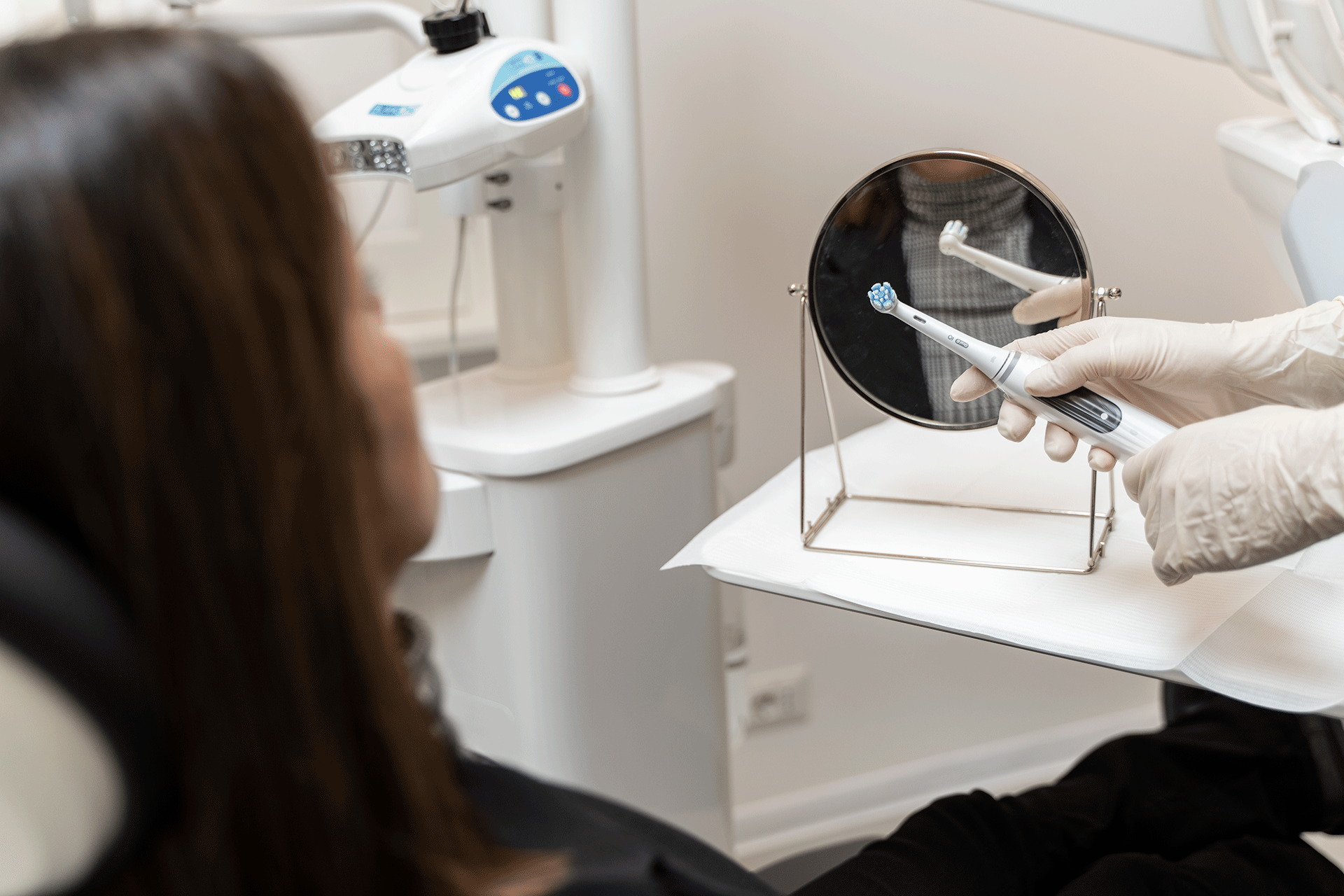
Your dental hygienist will demonstrate how to use each oral hygiene aid correctly, helping you achieve effective plaque removal while reducing the risk of tooth decay and gum disease.
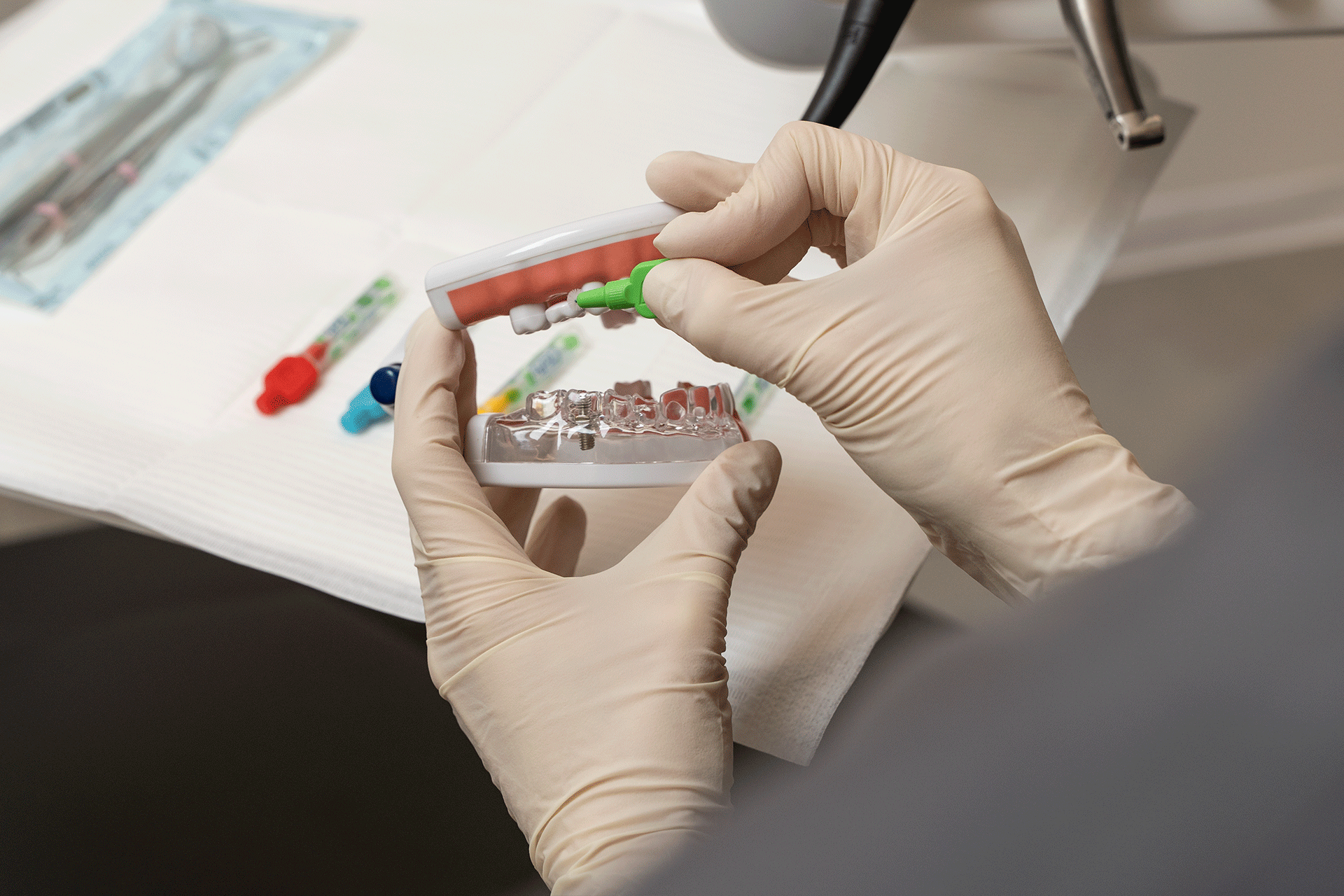
Ideal for cleaning narrow spaces between the teeth that a toothbrush cannot reach.
Recommended for patients with wider spaces between the teeth, dental implants, bridges or orthodontic appliances.
Your dental hygienist will recommend the most suitable brushing technique, helping you choose between a manual and an electric toothbrush based on your individual needs.
The choice of toothpaste is tailored to each patient's individual needs, whether for cavity prevention, dentine sensitivity or gum health.
Regular dental hygiene appointments allow us to monitor your oral health over time, detect potential problems at an early stage, and help maintain the results achieved. The frequency of your appointments is tailored to your individual risk of tooth decay, gingivitis or periodontal disease.
Below you'll find answers to some of the questions our patients ask most frequently about professional dental hygiene. If you have any further questions, we'll be delighted to discuss them with you during your appointment.
To keep your teeth and gums healthy, it is recommended to brush your teeth at least twice a day for around two minutes using the correct technique and a toothbrush suited to your individual needs. During your professional dental hygiene appointments, our dental hygienists will demonstrate the most effective brushing techniques based on your individual oral health needs.
Both can be effective when used correctly. An electric toothbrush makes plaque removal easier and helps many patients maintain a more consistent brushing technique, while a manual toothbrush requires greater care to ensure the correct brushing movements are used.
It depends on the amount of space between your teeth. Dental floss is recommended for very narrow spaces, while an interdental brush is generally more effective for wider spaces or for patients with periodontal disease, dental implants or orthodontic appliances. During your appointment, we will recommend the most suitable option for your individual needs.
There is no single toothpaste that is suitable for everyone. The right choice depends on factors such as tooth sensitivity, gingivitis, a high risk of tooth decay, or other individual oral health needs. Our team will always recommend the toothpaste that is best suited to your specific requirements.
Good home oral hygiene helps control bacterial plaque on a daily basis, reducing the risk of tooth decay, gingivitis, periodontal disease and bad breath. Even the highest standard of professional dental care cannot replace good daily oral hygiene habits.
The frequency depends on each patient's individual level of risk. In most cases, a professional dental hygiene appointment every six months is recommended. However, patients with periodontal disease, dental implants or a greater tendency to develop tartar may require more frequent appointments.
Le corrette tecniche di spazzolamento e l’utilizzo degli strumenti più adatti rappresentano il primo passo per prevenire carie e malattie gengivali. Durante ogni seduta di igiene professionale, gli igienisti di Odontoiatria Kirschner provide personalised guidance tailored to each patient's individual oral health needs.